When most people hear “peer pressure,” they picture the scary stuff: skipping class, vaping behind the school building, or doing something risky just to fit in. And yes those things happen.
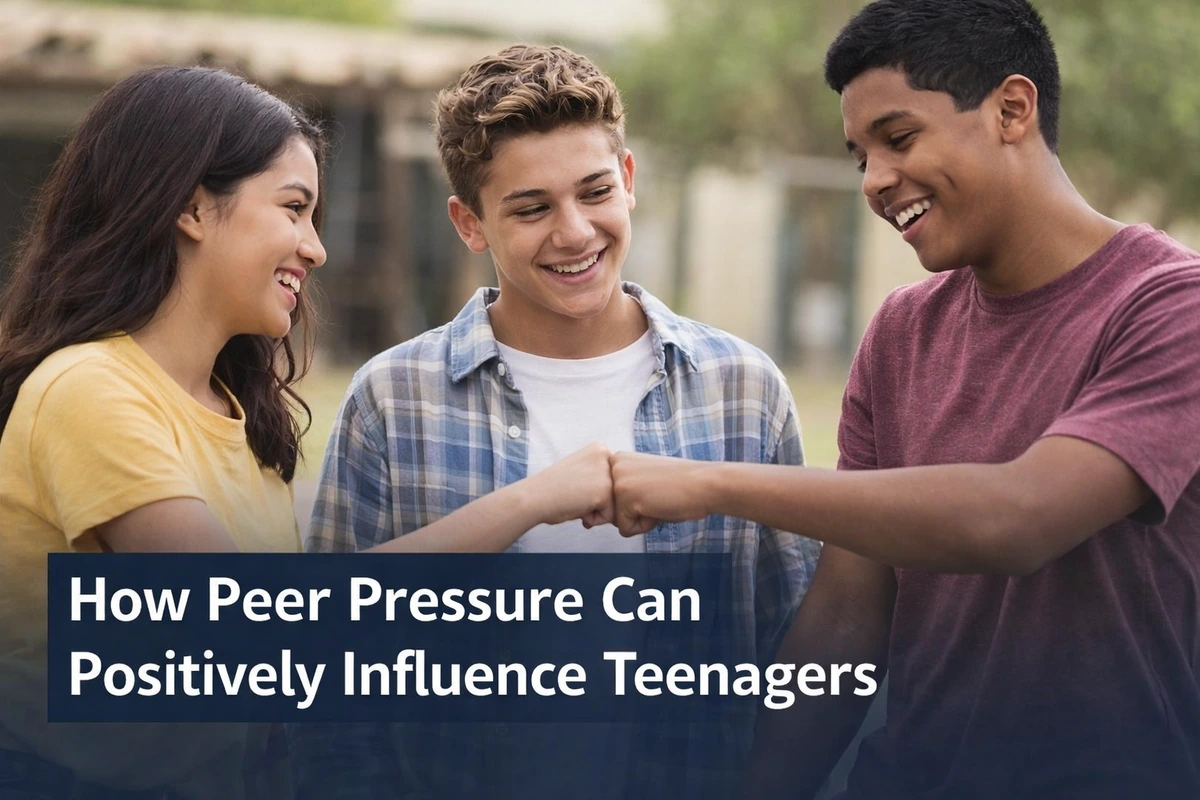
But peer pressure isn’t automatically bad. It’s really just influence. And teenagers live in a world where influence is everywhere: friends, group chats, school culture, sports teams, and social media. That means the same force that can pull a teen down can also lift them up.
Positive peer pressure happens when friends push each other toward better choices without threats, bullying, or fear. It can look small, even boring: “Come with us to study,” “Tryouts are today,” “Don’t do that, it’s not worth it.” But those small moments can shape a teen’s confidence, habits, and future.
This article breaks down 7 real ways positive peer pressure can positively influence teenagers, plus what parents and teachers can do to encourage it.
Why Peer Pressure Feels So Strong in Teen Years
During adolescence, teenagers are still building identity. They’re asking questions like:
- “Who am I really?”
- “Do I belong here?”
- “What do people think of me?”
That’s why friend groups matter so much. A teen may ignore a parent’s advice but care deeply about what their friends celebrate, laugh at, or judge.
There’s negative peer pressure that leads to risky behavior. But positive peer pressure is the healthy side of the same idea: friends encouraging each other to grow, try, improve, and stay safe.
1) It Encourages Better Grades and Stronger Study Habits
One of the most common benefits of positive peer pressure is academic improvement especially when school success becomes “normal” in the group.
It doesn’t even need to be serious. Sometimes it starts with a simple routine:
- meeting after school
- sharing notes in a group chat
- reminding each other about deadlines
Real example: A teen who usually avoids homework sits with friends in the library during exam week. At first they’re just there for company. Then they start copying the rhythm: open the book, highlight, ask a question, solve one problem. After a few sessions, studying feels less lonely and less impossible.
This is how positive habits spread: not through speeches, but through repeated exposure.
2) It Promotes Healthier Habits Without Feeling Like “Rules”
Many teens resist advice that feels like control. But they often follow habits that feel like group identity.
If a teen’s friends:
- play sports
- walk together
- drink water instead of energy drinks
- avoid smoking/vaping
they’re more likely to do the same. Not because they’re perfect, but because they don’t want to feel left out.
A realistic scene: Two friends go to football practice. One says, “Come with us. It’s boring alone.” The teen joins for social reasons, then slowly gets better, feels stronger, and starts caring.
That’s positive peer influence in action health becomes normal, not forced.
3) It Builds Confidence and Social Skills
Confidence doesn’t always come from inside first. Sometimes it comes from being welcomed.
A supportive friend group can encourage teens to:
- speak in class
- try leadership roles
- join clubs
- perform in events
- apply for competitions
Example: A shy teen gets pulled into a school club because a friend insists: “Just come once. If you hate it, we’ll leave.” The teen goes, sits quietly, then slowly starts talking. Later, they realize they can handle social spaces without panic.
Positive peer pressure works best when it sounds like support, not mocking:
- “You can do it.”
- “We’re all nervous.”
- “I’ll stand with you.”
4) It Strengthens Moral Values and Respect
Teenagers learn values in real time. Not just from what adults say but from what their friends tolerate.
When a friend group values:
- respect
- kindness
- honesty
- responsibility
it creates an unspoken rule: “This is who we are.”
Real example: A teen is about to post a cruel comment online. Their friend says, “Don’t. That’s not you.” That one sentence can stop harm and build character. It also teaches something important: strong friends protect your best self.
This is also why toxic friendships are dangerous: they normalize disrespect and cruelty. The group becomes the “moral atmosphere.” Online pressure can also turn into cruelty, and cyberbullying can have serious long-term mental health effects.
5) It Helps Teens Avoid Risky Choices in the Moment
A lot of risky teen behavior happens in seconds when emotions are high and the group is watching.
The best protective factor is often one good friend who says no.
A common scenario: Someone offers a vape at a gathering. A supportive friend steps in:
- “We’re not doing that.”
- “Let’s go outside.”
- “Not worth it.”
That’s still peer pressure. But it’s pressure toward safety.
This is why “good influence” isn’t just about being smart. It’s about having backup in the moment someone who makes the safer choice feel normal. If your teen struggles in those fast moments, this guide helps: how to say no to peer pressure.
6) It Creates Motivation Through Healthy Competition
Competition becomes harmful when it shames people. But it becomes powerful when it encourages growth.
Positive peer pressure can motivate teens to:
- improve fitness
- practice skills
- stay consistent
- aim higher
The key difference is tone.
Healthy competition sounds like:
- “Let’s improve together.”
- “You were better today than last week.”
- “Try again you’re close.”
Unhealthy competition sounds like:
- “You’re slow.”
- “You’ll never be like us.”
- “Don’t embarrass us.”
When teens feel supported, they try harder. When they feel judged, they hide.
7) It Helps Teens Discover Interests and Identity
Teens often find their “thing” because a friend introduced them to it:
- art
- gym
- coding
- debating
- reading
- volunteering
- public speaking
- entrepreneurship
Sometimes a teen needs exposure before they can even know what they like.
Real example: A teen joins a volunteer drive because friends are going. They expect it to be boring. Instead, they feel proud afterward like they did something real. That experience can shape identity: “I’m the type of person who helps.”
This is one of the most underrated ways peer pressure can positively influence teenagers: it expands their world.
How Parents and Educators Can Encourage Positive Peer Pressure
1) Focus on environments, not just “friends”
Instead of trying to control who your teen talks to, guide them toward places where healthy behavior is normal:
- sports teams
- debate clubs
- science clubs
- community volunteering
- tuition/study groups
- skill-based workshops
Good environments make good friendships more likely.
2) Build trust first (especially online)
Social media can intensify peer pressure, but constant monitoring can sometimes backfire. Why Monitoring Kids’ Social Media May Do More Harm Than Good explains why.
3) Ask questions that don’t feel like interrogation
Teens shut down when questions feel like police.
Try:
- “How do you feel after hanging out with them?”
- “Do they bring out your best side?”
- “What do you like about that group?”
This gives you real information without starting a fight.
4) Teach a simple decision filter
Teens don’t need a long lecture. They need a quick tool.
Tell them to ask themselves:
- “Is this helping me or harming me?”
- “Would I do this if nobody was watching?”
- “Will I regret this tomorrow?”
That’s critical thinking in teen language.
5) Praise the choice, not the perfection
When a teen makes a good decision, notice it. Not in a dramatic way just steady recognition.
Example:
- “I’m proud you left when it got unsafe.”
- “I respect that you said no.”
- “I like how your friends support your goals.”
Short Real-Life Stories (Human, Not Perfect)
Story 1: The study shift
A teen who avoided homework started meeting friends at the library just to “hang out.” After a few weeks, the teen stopped feeling embarrassed about asking questions. Their grades didn’t jump overnight, but the pattern changed: they started trying.
Story 2: The safer friend
At a party, a teen felt pressure to do something risky. One friend noticed and quietly said, “Let’s go. I’ll tell them we’re leaving.” That small rescue mattered more than any school lecture.
Conclusion
Peer pressure is powerful because teenagers want to belong. That won’t change and it doesn’t have to.
What matters is the direction that influence takes. With the right circle, positive peer pressure can help teens build better habits, grow confidence, avoid risky choices, and develop strong values. Parents and educators can’t control every moment, but they can guide teens toward activities and friendships that bring out their best side.
For more practical teen and parenting guides, visit Best Childcare Tips.
FAQs
Positive peer pressure is when friends influence a teen to make healthier, safer, or more responsible choices like studying, joining sports, avoiding substances, or being respectful.
Yes. Peer pressure can be good when it encourages constructive behavior and helps teens build habits and confidence through supportive friendships.
Examples include friends encouraging each other to study, join a club, volunteer, avoid vaping, or leave unsafe situations.
Parents can guide teens toward structured activities (clubs, sports, volunteering), communicate without attacking friendships, and teach simple decision-making tools.
Teens resist negative pressure by staying close to supportive friends, practicing simple refusal lines, leaving unsafe situations early, and choosing environments that match their values.