What if raising happy, confident kids isn’t about doing more but about doing a few important things consistently?
Most parents don’t need another list of “perfect parenting” rules. They need a clear foundation: childcare basics that help children feel safe, loved, capable, and understood. With steady basics, children usually do better emotionally, socially, and at school because their nervous system feels safer, and their behavior becomes easier to guide.
These positive parenting tips are designed mainly for ages 2–12, with small adjustments for toddlers and teens.
Key Takeaways (save this)
- Connection first: calm kids don’t come from strictness they come from safety.
- Routines reduce chaos: sleep, meals, movement = better mood and behavior.
- Boundaries build confidence: “kind + firm” beats yelling or giving up.
- Resilience grows through small struggles supported, not rescued.
The Childcare Basics That Shape a Happy Childhood
Before the tips, here’s the big picture. Kids feel confident when they feel:
- Connected (emotionally safe with you)
- Capable (they get chances to try and learn)
- Guided (clear boundaries, not chaos)
- Healthy (sleep, food, and movement support mood)
- Seen (their feelings and needs are taken seriously)
These are childcare basics, but they’re also life skills your child carries into friendships, school, and adulthood.
1) Emotional Connection Comes First
A child who feels emotionally safe behaves differently. They calm down faster, take healthier risks, recover from mistakes and trust you enough to talk even when they’re upset.
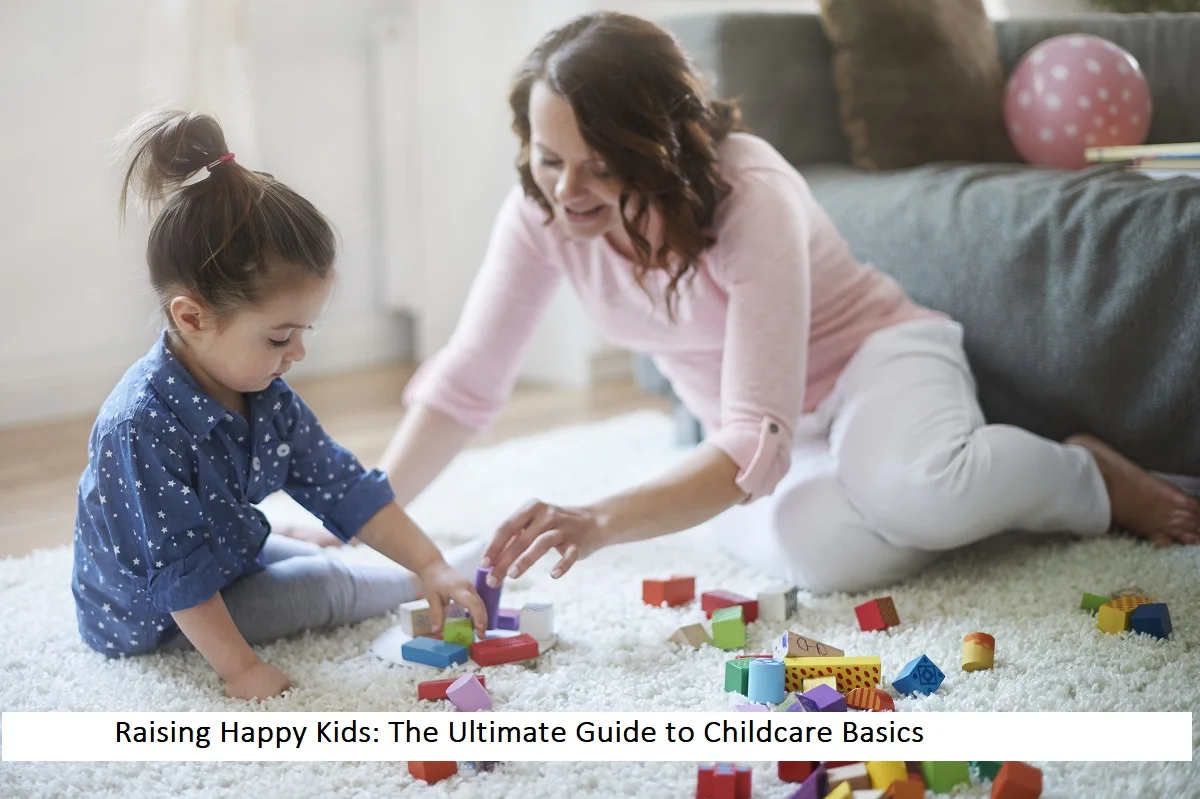
Real-life example: Your child bursts into tears because their block tower fell. You could say, “Stop crying.” Or you can build regulation first: “That was frustrating. I’m here.”
What to do (simple habits that work)
- Name what you see:
“You look frustrated.” “That felt unfair.” - Listen without fixing:
Sometimes they want comfort, not solutions. - Repair quickly after conflict:
“I didn’t handle that well. I’m sorry. Let’s try again.”
Small daily connection beats one big “perfect” moment. This is one of the most powerful childcare basics for raising confident kids.
2) A Positive Home Environment is Built in Tiny Moments
A happy home isn’t always quiet or tidy. But it does feel safe. Kids should feel they can make mistakes without shame and tell the truth without fear.
Try this
- Notice effort more than results:
“You worked hard on that” builds confidence better than “You’re so smart.” - Use more invitations than commands:
“Let’s race to the bathroom” often works better than “Go now!” - Give one “yes” each day:
A yes could be a game, a choice, or extra cuddle time. It reduces power struggles.
A warm home doesn’t mean no rules. It means rules with respect one of the best positive parenting tips for everyday life. If you want practical ideas to set up a safe home environment for kids, read How to Create a Safe and Stimulating Environment for Your Child.
3) Play is Not “Extra” It’s Emotional Fuel
Play isn’t just fun. It’s how children process stress, practice social skills, and learn problem-solving. Kids often behave better when they’ve had enough play.
Real-life example: After a long school day, your child starts picking fights. Before you label it “attitude,” try 20 minutes of outdoor play or a silly game. Many kids reset through movement and laughter.
Childcare Basics For Play
- Protect unstructured playtime:
Not every hour needs a class, worksheet, or screen. - Join sometimes, observe sometimes:
Even 10 minutes of focused play fills the “connection tank.” - Use play to teach gently:
Turn sharing into a game. Turn clean-up into a challenge.
Play is one of the simplest healthy routines for kids because it lowers stress and supports emotional balance.
4) Boundaries Create Confidence (Not The Other Way Around)
Many parents worry boundaries will make kids unhappy. But clear, calm limits make kids feel safer. Children handle life better when they know what to expect.
What Healthy Boundaries Look Like
- Clear: “We don’t hit.”
- Calm: Not shouted in anger
- Consistent: The rule doesn’t change daily
- Compassionate: “I know you’re mad. Still, we don’t hit.”
Boundaries are a core part of childcare basics because they teach self-control over time.
5) Teach Resilience In Real Life, Not Speeches
Resilience grows when kids face small challenges with support not when adults remove every difficulty.
Real-life example: Your child says, “I can’t do it!” during homework. Instead of taking over, try: “Let’s do the first step together, then you try the next one.”
Practical Ways To Build Resilience
- Let them struggle a little (safely):
Give space to try before jumping in. - Ask coaching questions:
“What’s one thing you can do next?”
“Do you want help, or do you want to try again?” - Normalize mistakes:
“Mistakes help brains grow.”
Confident kids aren’t kids who never fall they’re kids who believe they can get back up.
6) Healthy Habits Make Emotions Easier
A lot of “behavior problems” are really sleep issues, hunger, overstimulation, or lack of movement. These same issues can sometimes appear as daycare refusal. If your child suddenly starts struggling with drop-off after previously being happy there, see our guide to sudden daycare refusal in toddlers.
Childcare basics aren’t only emotional. They’re physical too.
The Three Habits That Change Everything
- Sleep routines: consistent bedtime + calm wind-down (bath, story, dim lights)
- Food rhythms: regular meals/snacks reduce meltdowns and irritability
- Daily movement: outdoor time, walks, jumping, dancing anything counts
When the body feels better, the brain behaves better. These are healthy routines for kids that make parenting easier.
7) Independence Builds Confidence One Small Choice At a Time
Kids gain confidence when they feel capable. You don’t have to push independence you just offer small chances to practice it.
Easy Independence Ideas
- Give small responsibilities: setting the table, packing a bag, watering plants
- Offer limited choices: “Red shirt or blue shirt?” (too many choices overwhelms)
- Let them solve age appropriate problems: “What could we do if your toy breaks?”
This is a quiet but powerful childcare basics principle: capability grows through practice.
8) Discipline Without Yelling (Quick Steps)
If you want one fast method that works for many families, use this simple flow:
- Pause and breathe (your calm leads theirs)
- State the limit clearly: “I won’t let you hit.”
- Name the feeling: “You’re really angry.”
- Offer a safe option: “You can stomp, squeeze a pillow, or use words.”
- Follow through kindly: “We’ll try again when your body is calm.”
This approach is firm, but it protects connection one of the best positive parenting tips for long-term behavior.
9) Screen Time: Focus on Balance, Not Guilt
Screens aren’t automatically “bad.” The goal is to protect sleep, focus, real-world play, and family connection. When screen time has clear limits, kids usually argue less because they know what to expect.
Healthy Screen Boundaries
- No screens during meals (protect family talk)
- No screens 60 minutes before bed (sleep improves fast)
- Screen-free zones (bedrooms are a great start)
- Choose calmer, age-appropriate content (avoid fast, overstimulating videos)
Most importantly: don’t only say “no.” Offer a “yes” alternative books, crafts, puzzles, outdoor play, or a quick game together. If you’re thinking about using apps to manage devices, read Do Parental Controls Really Make You a Better Parent? What Parents Should Know it explains what parental controls help with, and what still needs trust and communication.
10) Parent Selfcare Is Not a Luxury Kids Feel Your Nervous System
Children absorb stress. When you’re drained, parenting turns into survival mode. Taking care of yourself is part of the childcare basics people forget.
Simple Selfcare That Fits Real Life
- Micro-breaks: 5–10 minutes of tea, stretching, fresh air
- Lower the daily standard: focus on what matters most, not perfection
- Ask for support early: don’t wait until burnout
A calmer parent helps create a calmer home.
Quick Checklist: Childcare Basics You Can Start Today
✅ 10 minutes of focused connection daily
✅ One clear boundary repeated calmly
✅ Consistent bedtime routine
✅ Daily movement (even short)
✅ Praise effort, not personality
✅ One small responsibility each day
✅ Reduce screens before sleep
✅ Repair after conflict with one honest sentence
Consistency beats intensity.
FAQs
Childcare basics are the daily foundations that help kids thrive: emotional connection, routines, boundaries, play, healthy habits, and confidence building independence.
Give warmth and structure. Confidence grows when kids feel loved, have clear boundaries, and get chances to try, fail safely, and learn.
Start with basics first: sleep, hunger, overstimulation, and connection. Then add calm boundaries and teach coping skills (like breathing, choices, and safe outlets).
Conclusion: You’re Closer Than You Think
Raising happy, confident kids isn’t about being perfect. It’s about building a steady foundation one day at a time. When you focus on childcare basics like connection, routines, boundaries, play, and healthy habits, you create a home where children feel safe enough to grow.
And remember: the fact that you’re reading and learning already shows care. That care shown consistently becomes your child’s strength. If you want more step-by-step guides on routines, behavior, and child development, browse the parenting library on Best Childcare Tips.