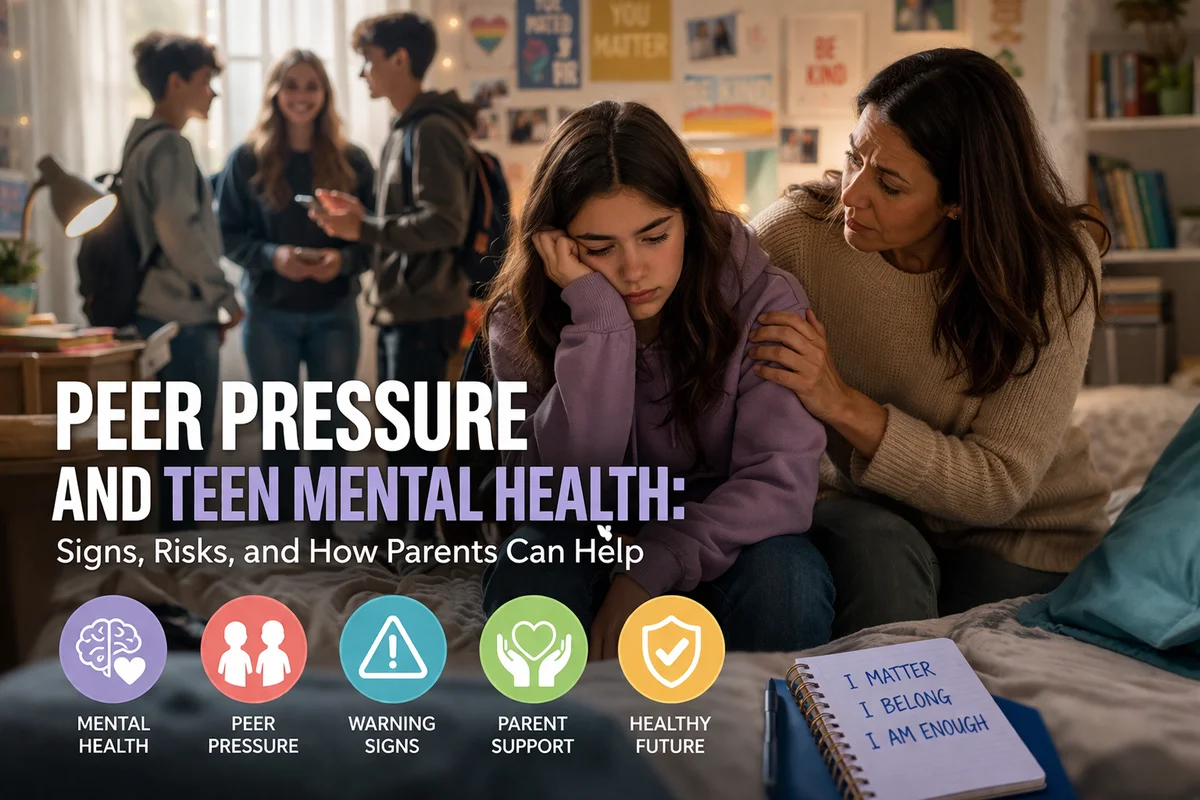
Teen years are full of change, and fitting in can feel very important. Friends, classmates, and online groups often shape the way teenagers think, dress, act, and even feel about themselves. While some social influence can be positive, unhealthy pressure can leave a deep emotional effect. That is why Peer Pressure and Teen Mental Health is such an important topic for parents today.
Many parents think peer pressure only means being pushed into something risky. In reality, it can be much quieter than that. A teen may feel pressure to look a certain way, hide emotions, follow trends, stay active on social media, or agree with a group even when it feels wrong. Over time, these daily pressures can affect mood, confidence, and emotional well-being.
Why peer pressure affects teens so deeply
Teenagers are still building their identity. At this stage, approval from friends can feel extremely powerful. A teen may know something is unhealthy, but still go along with it because they fear rejection, embarrassment, or being left out. This is one reason Peer Pressure and Teen Mental Health are so closely connected.
The emotional impact is often stronger when a teen already feels insecure, lonely, or unsure of where they belong. Even small comments from peers can affect self-worth. When that happens often, it can create stress that follows a teen into school, home life, friendships, and online spaces.
Common mental health effects of peer pressure
Peer pressure does not affect every teen in the same way, but some patterns are very common.
1. Anxiety and constant worry
A teen under social pressure may start worrying too much about what others think. They may overthink their appearance, the way they speak, what they post online, or whether they are accepted by a certain group. This can lead to ongoing stress and emotional exhaustion.
2. Low self-esteem
When a teen starts measuring their worth by other people’s approval, confidence becomes weak. They may feel they are not good enough unless they dress, act, or live like everyone else. This can damage self-esteem and make it harder for them to trust their own judgment.
3. Sadness and emotional withdrawal
Some teens respond to pressure by becoming quiet and distant. They may stop sharing their feelings, avoid family conversations, or spend more time alone. Parents sometimes mistake this for normal moodiness, but it can be a sign that something deeper is happening.
4. Risky choices
One of the most serious peer pressure effects on teens is that they may take part in unhealthy behavior just to fit in. This can include lying, hiding things, breaking rules, unsafe online behavior, or other choices they would not normally make on their own.
Signs peer pressure is affecting your teen’s mental health
Parents often ask how to spot the warning signs early. The truth is that they are not always dramatic. Sometimes the signs are quiet but consistent.
Watch for changes like:
- sudden anxiety before school or social events
- low confidence or constant self-comparison
- becoming secretive about friends or online activity
- mood swings after being on social media
- fear of being left out
- a strong need to copy what others are doing
- avoiding family time or meaningful conversation
- changes in sleep, appetite, or daily behavior
These signs do not always mean there is a serious mental health condition, but they do show that a teen may be under emotional pressure.
Social media has made peer pressure harder to escape
Today, peer pressure does not end when school ends. It follows teens through phones, group chats, photo sharing, and constant comparison online. A teen can feel judged, excluded, or not good enough without anyone saying it directly. Just seeing what others post can create pressure to look perfect, stay popular, or keep up.
This is why Peer Pressure and Teen Mental Health has become even more important for modern parents. Social media can quietly increase teen anxiety, stress, and self-doubt, especially when a child already feels vulnerable.
Teens also need practical ways to set boundaries, and learning how to say no without losing yourself can help them resist unhealthy social pressure.
How parents can help teens handle peer pressure
Parents cannot remove every social influence from a teen’s life, but they can make a huge difference in how a teen responds to it.
Keep conversations calm and open
Teens are more likely to speak honestly when they do not feel judged. Try asking simple, open questions instead of jumping straight into advice. A calm response builds trust.
Teach confidence, not just obedience
A teen who feels secure in their values is less likely to be controlled by a group. Help them understand that being accepted should never come at the cost of their emotional health, safety, or self-respect.
Talk about real-life situations
Use examples they can relate to: social media pressure, copying trends, staying silent in a group, or joining in harmful behavior just to belong. Practicing responses ahead of time makes it easier for them to handle those situations in real life.
Pay attention to friend groups
Not every friendship is harmful. In fact, positive friendships can support mental health. The goal is not to isolate teens from peers. The goal is to help them recognize the difference between healthy influence and harmful pressure.
Not all peer influence is bad, and parents should also understand how positive peer pressure can positively influence teenagers in healthy and encouraging ways.
When peer pressure begins to affect physical health too
Mental health and physical health often overlap. A teen under heavy social pressure may change eating habits, develop body image worries, or feel pushed to match unrealistic beauty standards. Stress, shame, and comparison can all contribute to unhealthy patterns.
In some cases, social influence around body image and appearance can go even further, which is why it is worth reading about peer pressure and teen obesity: causes, effects, and solutions as well.
Peer pressure versus parental influence
Many parents fear that once friends become important, their role becomes smaller. That is not fully true. Peer influence is powerful, but parental influence still shapes values, boundaries, and emotional security in lasting ways. A teen may not always show it, but support at home still matters.
If you want a deeper look at this balance, read Peer Pressure vs Parental Influence: Which Shapes Your Child’s Future? to see how both forces affect long-term development.
What parents should do if they notice serious distress
If your teen seems constantly anxious, emotionally shut down, unusually angry, or deeply affected by friendships and social approval, do not brush it off too quickly. Start with honest conversation, but be willing to get extra support if needed. A school counselor, pediatrician, or mental health professional can help if the problem is becoming more serious.
This topic is not about blaming friends or controlling every decision. It is about helping your child feel emotionally strong enough to handle pressure without losing themselves.
Final Thoughts
Peer Pressure and Teen Mental Health should not be treated as a small parenting issue. The need to fit in can affect anxiety, stress, confidence, choices, and emotional stability in ways that are easy to miss at first. When parents stay involved, listen well, and respond early, they can help teens build resilience and healthier boundaries.
The goal is not to keep teens away from people. The goal is to help them stay connected without giving away their sense of self.
FAQs
Peer pressure can affect teen mental health by increasing anxiety, lowering self-esteem, creating stress, and pushing teens toward unhealthy choices just to fit in.
Common signs include worry about fitting in, sudden behavior changes, low confidence, secrecy, mood swings, and constantly comparing themselves to others.
Yes. Social media can intensify pressure by exposing teens to nonstop comparison, trends, group expectations, and fear of missing out.
Parents can help by listening calmly, building confidence, discussing real-life situations, encouraging healthy friendships, and seeking support if emotional distress becomes serious.